Chromatic Studies
A proven track record, project by project
With a wealth of experience gained from over 15,000 chromatic studies across various cities, and our collaboration with leading research laboratories such as the CSIC, CRBMC, and UPC, we have established ourselves as a benchmark in material and color diagnostics for monumental restoration. Throughout years of research, we have developed reference standards for mortars and pigments. This has allowed us to build a specialized database focused on the color and urban fabric of our historical architectural heritage.


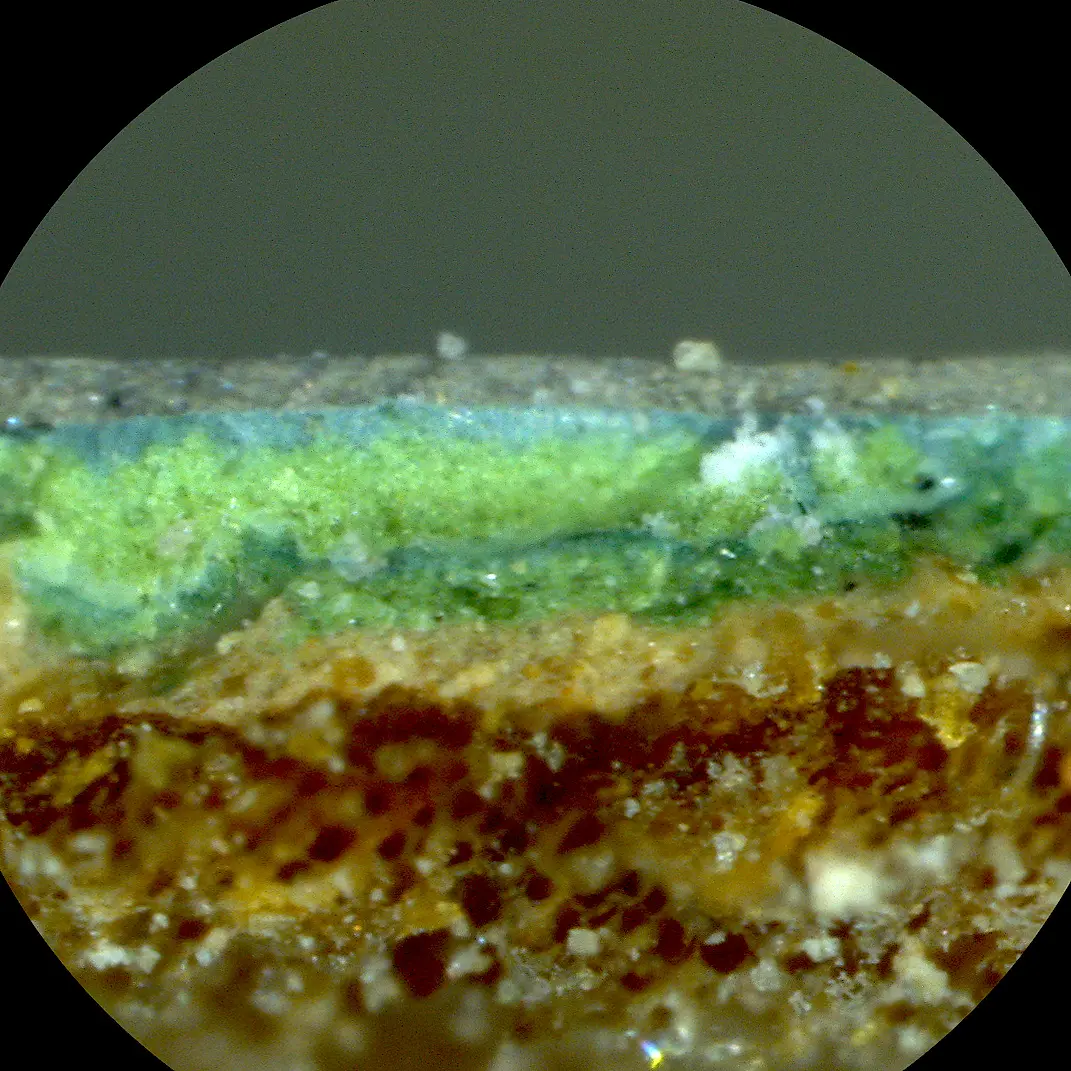
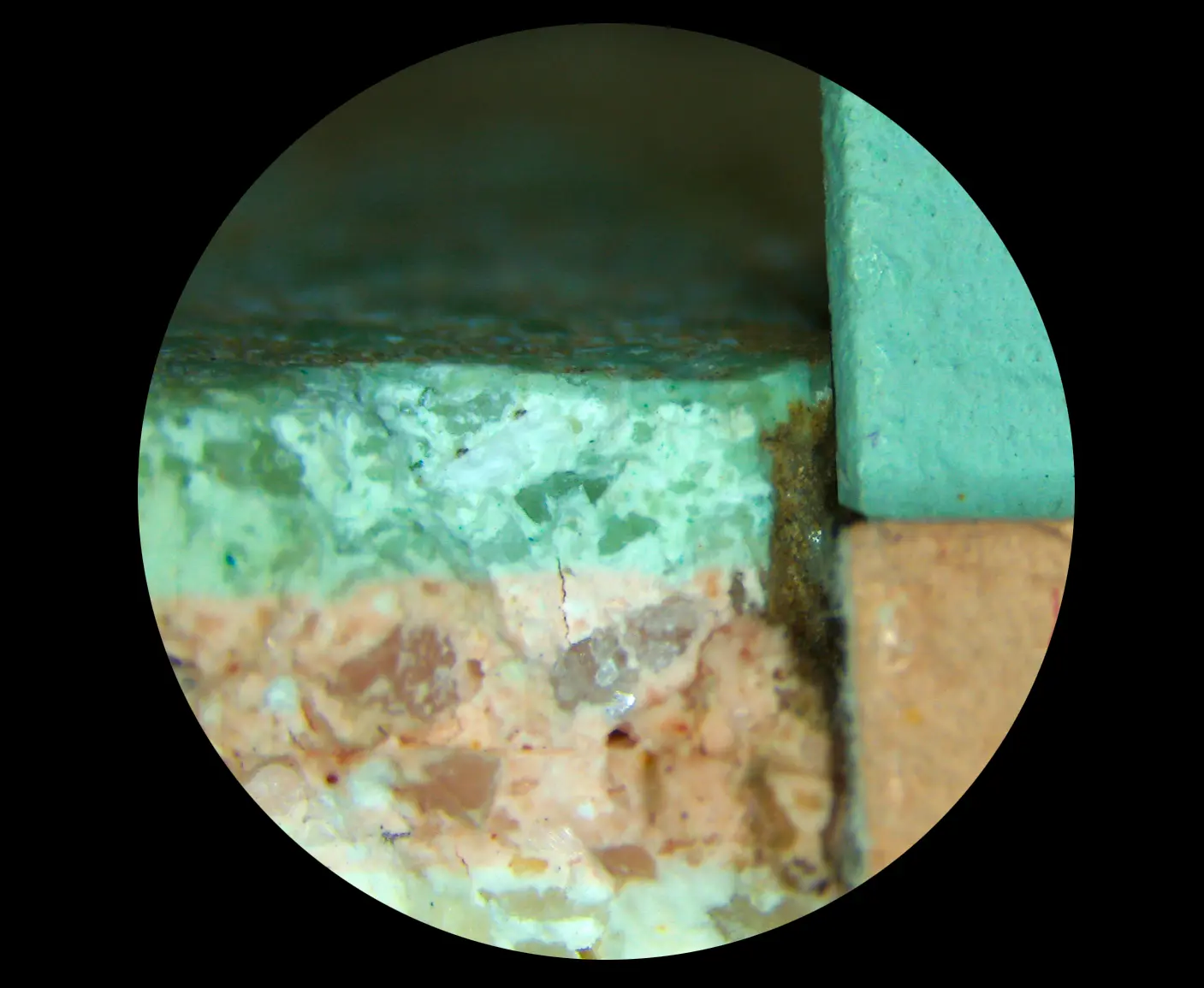
What is a Chromatic Study with stratigraphy documentation?
It is a technical report that applies scientific methodology to document and analyze a building’s architecture. It includes an on-site visit and historical-artistic assessment, the extraction of micro-samples from architectural elements, and analysis in our specialized laboratory focusing on stratigraphy, colorimetry, and material characterization.
The result is a reasoned diagnosis that defines the original materials, textures, and colors, establishing a recommended restoration process in accordance with the color coding of the Barcelona Color Chart (ACC, RAL).
Would you like to request a chromatic study?
Please get in touch with us.
Phases of Chromatic Study
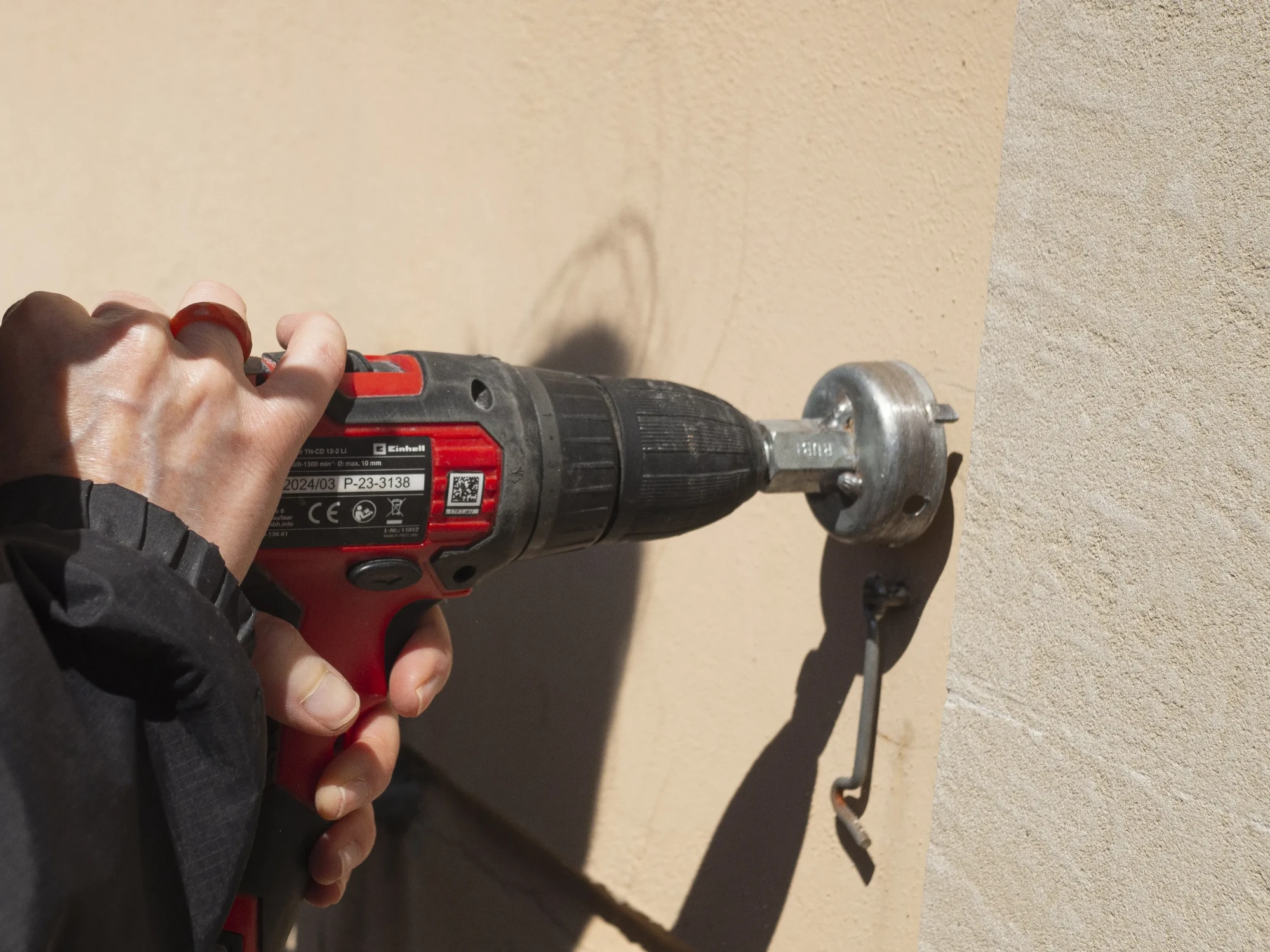
On-site sampling and stratigraphic testing
Our team extracts micro-samples and performs precision exposures in situ for subsequent laboratory analysis.
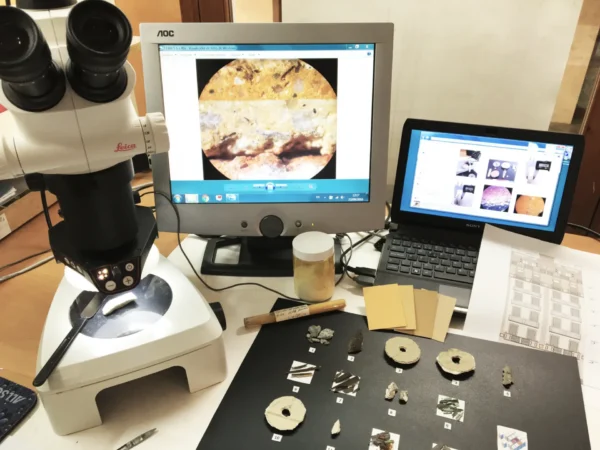
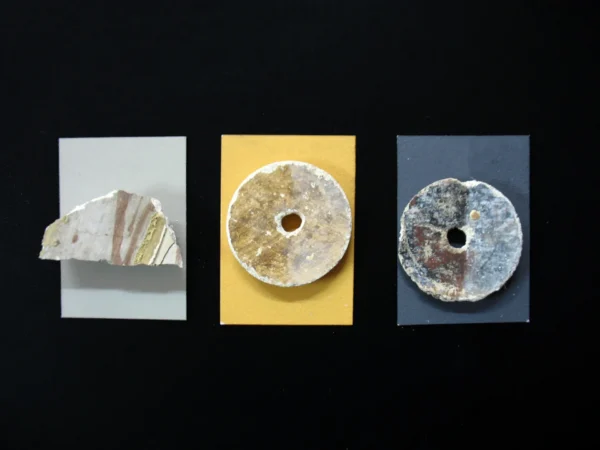
Material analysis
Stratigraphic characterization of original materials and pigments carried out in our own specialized laboratory.
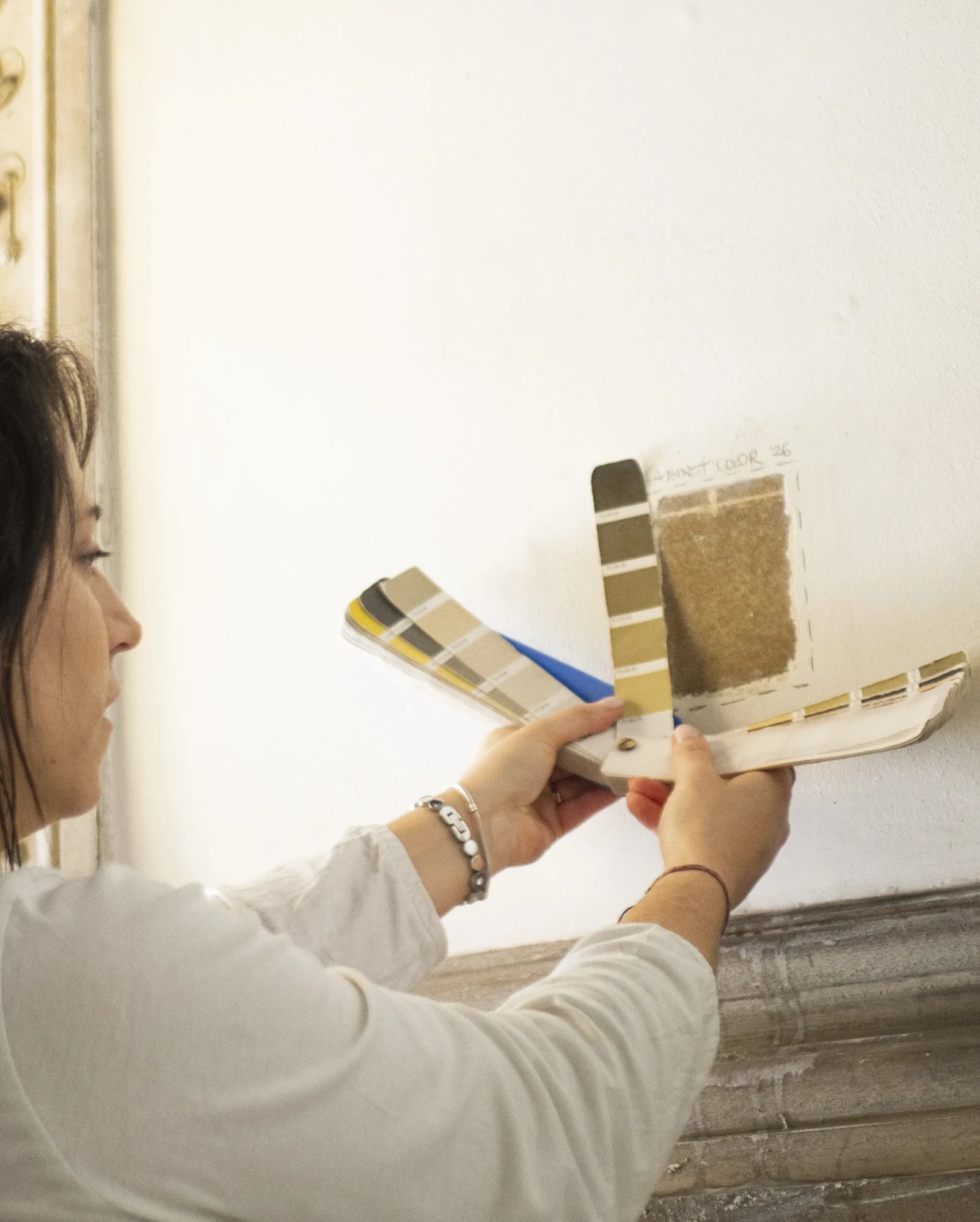
Color matching
Cross-referencing colors with international coding systems based on historical criteria and our proprietary database.
Chromatic report
: Analytical conclusions and restoration specifications required for building permit applications, strictly following the guidelines of the Department of Heritage.
Scope of work

Street-facing facades
The facade is the visible face of the city. A high-quality urban landscape depends on the rigorous stewardship of its architectural heritage. We reject improvisation, which is why we believe preliminary studies are an inseparable part of any facade restoration.

Rear facades
This is the building’s more domestic face, but it is no less important. Consequently, we apply the same methodology and rigor here as we do to street-facing facades.

Lobbies and stairwells
Heritage does not stop at the building’s front door. We conduct chromatic studies of common areas to bring to light original decorations and handcrafted faux-marbling hidden by the passage of time or disrespectful repainting.

Heritage assets
Our scientific methodology at the Gabinet del Color has proven to be an invaluable tool for uncovering the artisanal secrets of listed and landmark buildings (such as sgraffito, ironwork, cabinetry, and murals).

Party walls
Many cities view party walls as public spaces ripe for intervention. Our past work has turned dull party walls and weatherboarding into elements that revitalize the urban landscape and its surroundings. Some projects involve artistic interventions, while others focus on aesthetic and insulation improvements, treating the party wall in harmony with the main facade and sustainability goals.

New builds
In new construction projects, it is essential to consider color, texture, and materials so that the new structure seamlessly integrates into its urban or natural landscape. Chromatic studies for contemporary architecture bring balanced, thoughtful color design to new projects.


